

Reflections from the BSIT Capstone Exhibits at the CET Technofair 2026.
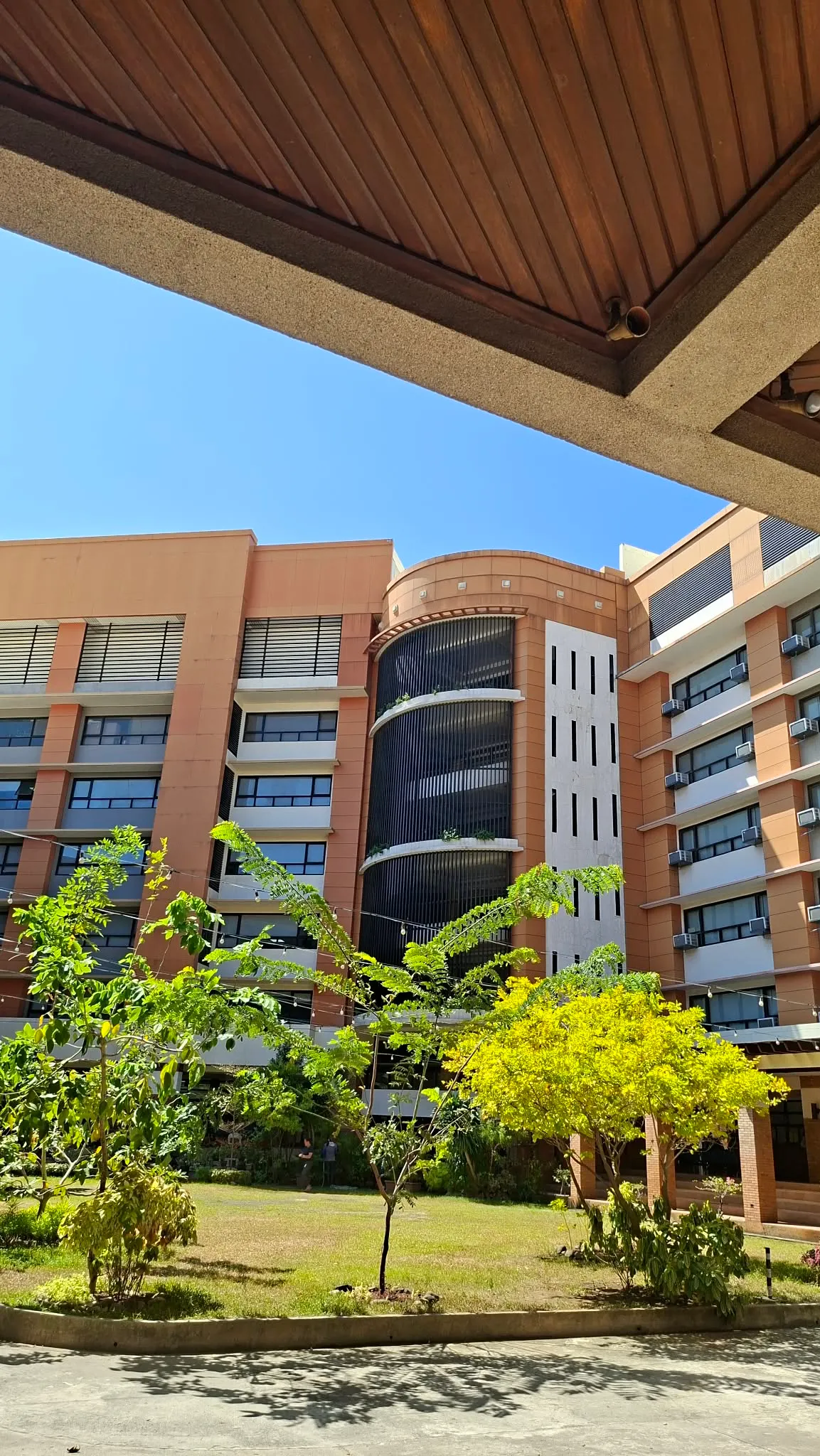
There’s something uniquely humbling about walking back into the halls of your alma mater — not as a student, but as someone being asked to evaluate the next generation of IT professionals.
Last March 17, I had the privilege of serving as one of the judges for the BSIT Capstone Project Exhibits at Holy Cross of Davao College’s Technofair 2026. And honestly? It was one of the more meaningful mornings I’ve had in a while.
Back to Where It All Started
CET Technofair is the HCDC — College of Engineering and Technology’s annual event that showcases thesis, capstone, and engineering projects across the entire department. Beyond the capstone exhibits, it also hosts a range of competitions and showcases across all student levels — including networking competitions, programming competitions, and engineering design project showcases. It’s one of the highlights of the academic calendar — a day where students get to put their work in front of real eyes, defend their ideas, and celebrate what they’ve built. The event also previously featured Conversazione, the formal research presentation component of these projects, making it a full showcase of both the technical and academic depth behind each work.
HCDC shaped a big part of who I am as a developer. Walking back through those doors with a different kind of responsibility — as a working IT professional today — felt full circle in the best way possible. It’s one thing to build software professionally every day. It’s another to sit across from students who are still figuring out what kind of builders they want to be, and realize you were exactly there not too long ago.
A Prediction That Aged Well
Back in CET Technofair 2023, I had a conversation with my computer programming professor, and even then I could see where things were headed — what I’d now call a paradigm shift: from functional software development and hardware-software integration, to AI-driven software systems that don’t just process problems, but reason through them.
For context — I was a graduating 4th year student at that time, participating in Technofair myself, both in the capstone exhibit and in Conversazione, the research presentation component of the event. So that conversation with my professor didn’t happen in the abstract — it happened on the same floor, during the same kind of event I was judging.
At the time, it felt like a distant forecast. Walking through Technofair 2026, I realized I was right. The shift has happened — and it’s happening right here in Davao, at HCDC.
Thirty-Five Projects. Thirty-Five Ideas Worth Caring About.
The exhibit featured 35 capstone projects, all anchored on the United Nations Sustainable Development Goals (SDGs). That framing alone tells you something about how CET is shaping its students — not just to write code, but to write code for something. These weren’t students who were handed a problem set. These were students who went out, found a problem worth solving, and built something around it.
The range of domains was genuinely impressive — spanning agritech, govtech, education, transport, and healthtech. Think AI-assisted tools for farmers, systems designed to streamline government services, platforms that reimagine how students learn, solutions that address the everyday friction of getting from point A to point B, and health-focused applications that bring technology closer to people who need it most.
What stood out across almost all of these domains was how deeply AI was embedded into the solutions. These weren’t apps that happened to use a machine learning model as a gimmick. The AI was the solution — doing the heavy lifting, driving the logic, and in many cases, making the product viable in a way that traditional approaches simply couldn’t. From predictive models to natural language interfaces to computer vision, the students weren’t just using AI as a tool. They were thinking in AI.
What I Was Looking For as a Judge
Coming in with a software development background, I found myself naturally drawn to a few things beyond the typical rubric:
- Does it solve a real problem? Not just technically, but practically — would someone actually use this?
- How well does the team understand their own solution? The best projects were the ones where students could speak confidently about their design decisions, not just demo a working prototype.
- Tech stack and platform choices. Most of the projects were mobile applications — which makes sense given where users actually are today. I was paying attention to whether their stack was appropriate for the problem they were solving, and whether they could justify their choices.
- AI tools, models, and LLMs in use. This was one of the more interesting lenses to evaluate through. Which models were they using? Were they fine-tuned or off-the-shelf? How well did the team understand the limitations of the AI they were building on top of? A team that knows what their model can’t do is far more credible than one that just demos the good cases.
- Compliance and security. Especially for healthtech and govtech projects, I was looking at how teams handled sensitive data — whether they had thought about data privacy, user authentication, and the ethical implications of deploying AI in high-stakes contexts. These aren’t afterthoughts. In the real world, they’re often what makes or breaks a product.
A Note to the Students
If any of the teams I evaluated happen to read this: your work matters. Not because it was perfect — it rarely is at this stage — but because you chose to build something with purpose. The SDG framing wasn’t just a requirement you ticked off; the best projects I saw that time wore it as a genuine north star.
But I want to say something to every 4th year student currently doing their capstone — and honestly, to every 1st, 2nd, and 3rd year student who will eventually get there: technical skills alone are no longer enough.
I say this from experience. The transition from academe to the IT industry hit differently than I expected. In school, you’re rewarded for understanding the theory, nailing the concepts, and getting the technical foundations right. That world makes sense — it’s structured, it’s logical, and effort maps fairly cleanly to outcomes.
The industry is a different beast entirely. It’s messier. It’s faster. And whether you like it or not, it runs on business logic as much as technical logic. Survival in the real world means understanding not just how to build something, but why it exists, who it serves, and whether it can sustain itself.
We are in the AI age. The bar for what’s buildable has never been lower. With tools like Lovable, Claude, OpenClaw, and Gemini, anyone can spin up a model, wire up an API, and ship a working app faster than ever before — with or without deep technical expertise. That means the differentiator is no longer just can you build it — it’s do you understand what you’re building well enough to make it matter beyond the classroom?
That requires a higher level of thinking. Not just about what technologies, tech stacks, system architecture, or AI models best solve a problem — but about how your product, as a whole, could potentially be a business. Not just solving a problem, but solving it in a way that’s sustainable, scalable, and yes — that someone would actually pay for.
Ask yourself: who is my user? What is my value proposition? How does this make or save someone money, time, or effort? Could this be a startup? A social enterprise? A SaaS product? These questions aren’t reserved for business majors. In the real world, they’re the questions that determine whether your solution lives on after the final defense — or gets archived on a Google Drive folder never to be opened again.
Keep building. Keep asking why. But also start asking why would someone pay for this — because that question will sharpen everything.
Gratitude to CET
A big thank you to Dr. Owen B. Pilongo, DBM-IS and the entire HCDC — College of Engineering and Technology department for the invitation. It takes deliberate effort to keep industry professionals connected to academic events like this, and I genuinely appreciate being considered for a role in it.
Events like Technofair are a reminder that the bridge between industry and academia needs to be walked in both directions. The students benefit from industry perspective, and honestly — professionals like me benefit just as much from seeing what the next generation is building. I’m glad I got to cross it today.
Until the next one. 🚀
This article is cross-posted on Medium. You can read more of his work on his Medium publication.
