

For startup founders, having a great product idea is just the beginning. The real challenge is bringing that idea to market, securing early adopters, and refining the product based on real-world feedback.
Without the right execution, even the most innovative startups can struggle to gain traction, let alone scale successfully. This is where a specialized brand design and software engineering agency becomes a game-changer.
A great agency doesn’t just build a product—it crafts a brand that resonates, engineers a software experience that drives adoption, and continuously refines the product based on real-world data.
Startups that work with the right agency move faster, make smarter decisions, and scale with confidence. Here’s how.
 1. Building a Brand That Gains Traction from Day One
Before a startup can acquire users, it needs a brand that attracts attention and earns trust. In a crowded market, having great technology isn’t enough—founders need a brand identity that stands out, tells a compelling story, and connects with the right audience.
Key Brand Elements That Drive Early Adoption:
- Brand Positioning That Speaks to the Right Market – A strong agency helps startups define who their product is for, why it matters, and how to communicate that clearly.
- Visual Identity That Creates Instant Trust – A professionally designed logo, color scheme, and design system make a startup look credible—even in the early days.
- Messaging That Converts Curious Visitors into Customers – A compelling website, clear product descriptions, and persuasive storytelling help turn interest into action.
- Seamless User Experience That Encourages Engagement – A brand isn’t just visuals—it’s also how users feel when they interact with the product. A great agency ensures every touchpoint, from landing pages to onboarding flows, reinforces the brand’s credibility.
Case Study: A health-tech startup struggling with low conversion rates rebranded with the help of an agency. By refining their messaging and optimizing their website’s user experience, they tripled their sign-up rate within three months.
2. Transforming the Product Based on Customer Feedback & Analytics
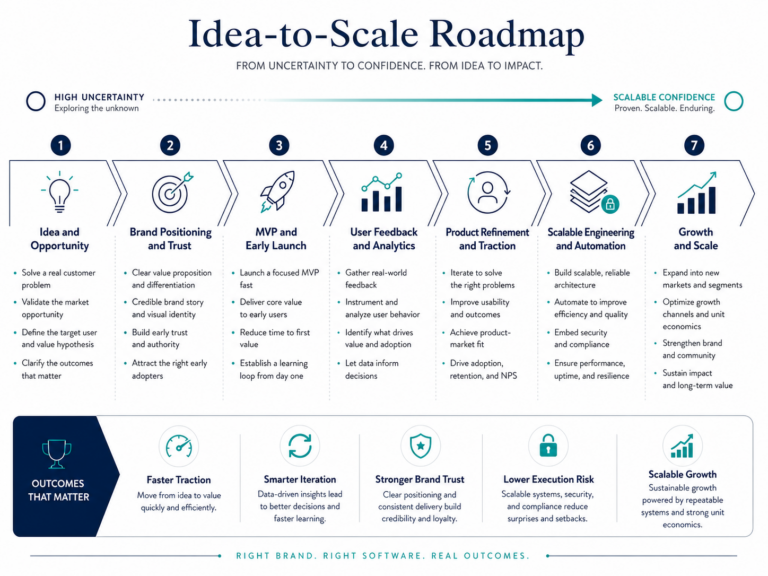
No product is perfect at launch. The real magic happens when startups listen to users, analyze data, and iterate quickly. But making the right changes requires more than intuition—it demands a structured approach to customer feedback, user analytics, and agile development.
How an Agency Helps Startups Adapt & Improve:
- Customer-Driven Product Evolution – The best agencies implement systems for gathering user feedback through in-app surveys, usability tests, and direct customer interviews.
- Data-Backed Decision Making – Instead of guessing what to improve, an agency integrates analytics tools that track user behavior, engagement rates, and feature adoption.
- Rapid Iteration & Agile Development – With an experienced engineering team, startups can quickly test, refine, and deploy new features without disrupting the product’s core functionality.
- Eliminating Bottlenecks & Pain Points – A great agency doesn’t just build new features—it also identifies areas where users get stuck and optimizes workflows for smoother engagement.
Example: A SaaS startup struggling with high churn rates partnered with an agency to analyze user behavior. By improving onboarding flows and refining key features, they reduced churn by 40% and boosted user retention.
3. Scaling with Confidence: Engineering for Growth
Once a startup has product-market fit, it’s time to scale. But scaling isn’t just about adding more users—it’s about ensuring that the product, infrastructure, and brand can handle rapid growth.
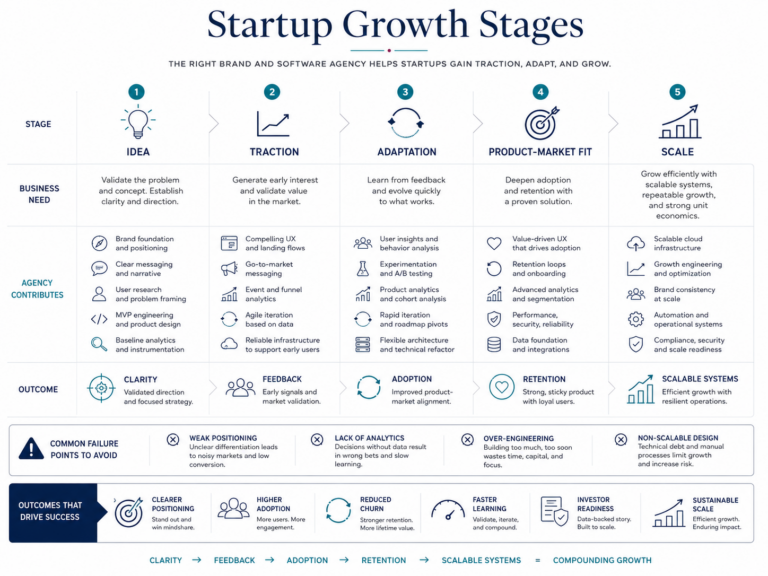
What an Agency Does to Ensure a Startup Scales Successfully:
- Scalable Architecture from Day One – The best agencies build cloud-native, high-performance architectures that can grow with demand, avoiding expensive rewrites later.
- Automation & Infrastructure Optimization – Scaling requires smart engineering, not just bigger servers. The right agency helps automate deployments, optimize databases, and streamline backend processes.
- Security & Compliance at Scale – As startups grow, security risks increase. A quality agency ensures data protection, compliance, and reliability—critical factors for gaining investor trust.
- Brand Evolution for a Wider Audience – Startups that scale often need a brand refresh. The agency helps expand the brand’s appeal without losing its core identity.
Example: A fintech startup preparing for Series B funding needed to scale its platform for thousands of new users. The agency re-engineered its backend, automated key processes, and refined its branding—leading to a seamless scaling experience and a successful $15M funding round.
4. The Wrong Agency Can Hold a Startup Back—Here’s What to Avoid
Not all agencies understand the unique challenges of scaling a startup. Choosing the wrong partner can lead to wasted resources, slow development, and a weak market presence.
Red Flags to Watch For:
-
- Generic “One-Size-Fits-All” Approaches – Startups need a tailored strategy, not off-the-shelf solutions.
- Lack of User Analytics & Feedback Loops
When an agency neglects data-driven decisions, they’re not truly optimizing—they’re simply guessing. - Over-Engineering Too Early – Premature complexity can slow down iteration cycles and make pivots harder.
- Design That Doesn’t Scale – A brand or UX/UI that works for a small audience may not be effective for wider market expansion.
The right agency doesn’t just build what you ask for—it helps you build what you need for long-term success.
5. Conclusion: Why the Right Agency is a Startup’s Best Investment
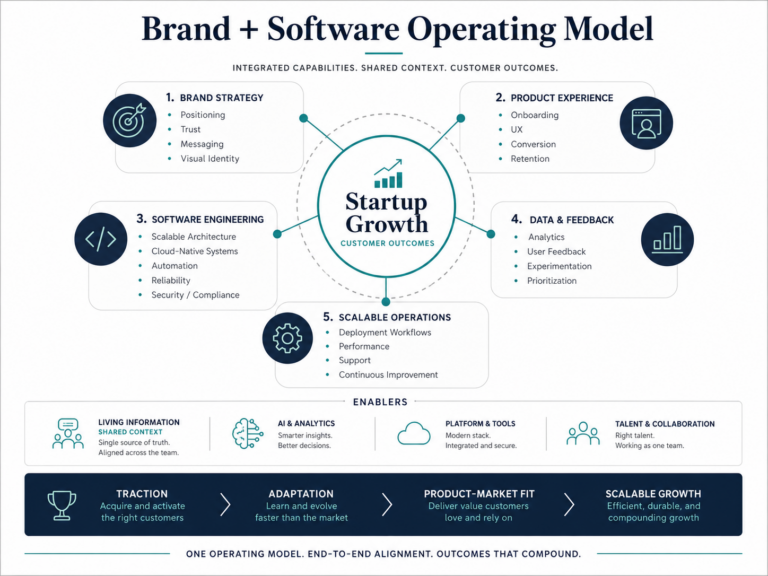
For startup founders, choosing the right brand design and software engineering agency isn’t just about building a product—it’s about ensuring success at every stage.
- A strong brand accelerates traction and adoption.
- Data-driven iteration ensures continuous improvement.
- Scalable engineering prepares startups for growth.</li>
In a world where 90% of startups fail, working with an agency that understands branding, user experience, and technical scalability isn’t a luxury—it’s a necessity.
With the right partner, founders can move from idea to traction, from traction to transformation, and from transformation to scalable success.
