

I recently returned from a quick solo trip to Singapore. It was a work-cation, but one that offered a refreshing change of scenery. Between savoring a hot bowl of laksa, soaking in the iconic view of Marina Bay, and immersing myself in Singaporean culture, I also saw it as a chance to learn. As a designer, I always try to seek new perspectives whenever I travel. So, I looked up design events happening during my stay, and just my luck, Singapore Design Week (SDW) had wrapped up in mid-September, but many of its exhibitions were still ongoing through November so I made sure that I included it in my itinerary.
I spent some time wandering around Bras Basah.Bugis, one of Singapore’s design districts where SDW events were held, alongside Marina, Orchard, and Singapore Science Park. Bras Basah.Bugis is essentially a planned ecosystem where education, curation, and commerce intersect to sustain the creative economy. Within its bounds are institutions like LASALLE College of the Arts, Nanyang Academy of Fine Arts (NAFA), and School of the Arts (SOTA), as well as cultural landmarks such as the National Museum of Singapore, Singapore Art Museum, National Design Centre, and the National Library. The concentration of design institutions shows that Singapore really takes design seriously.
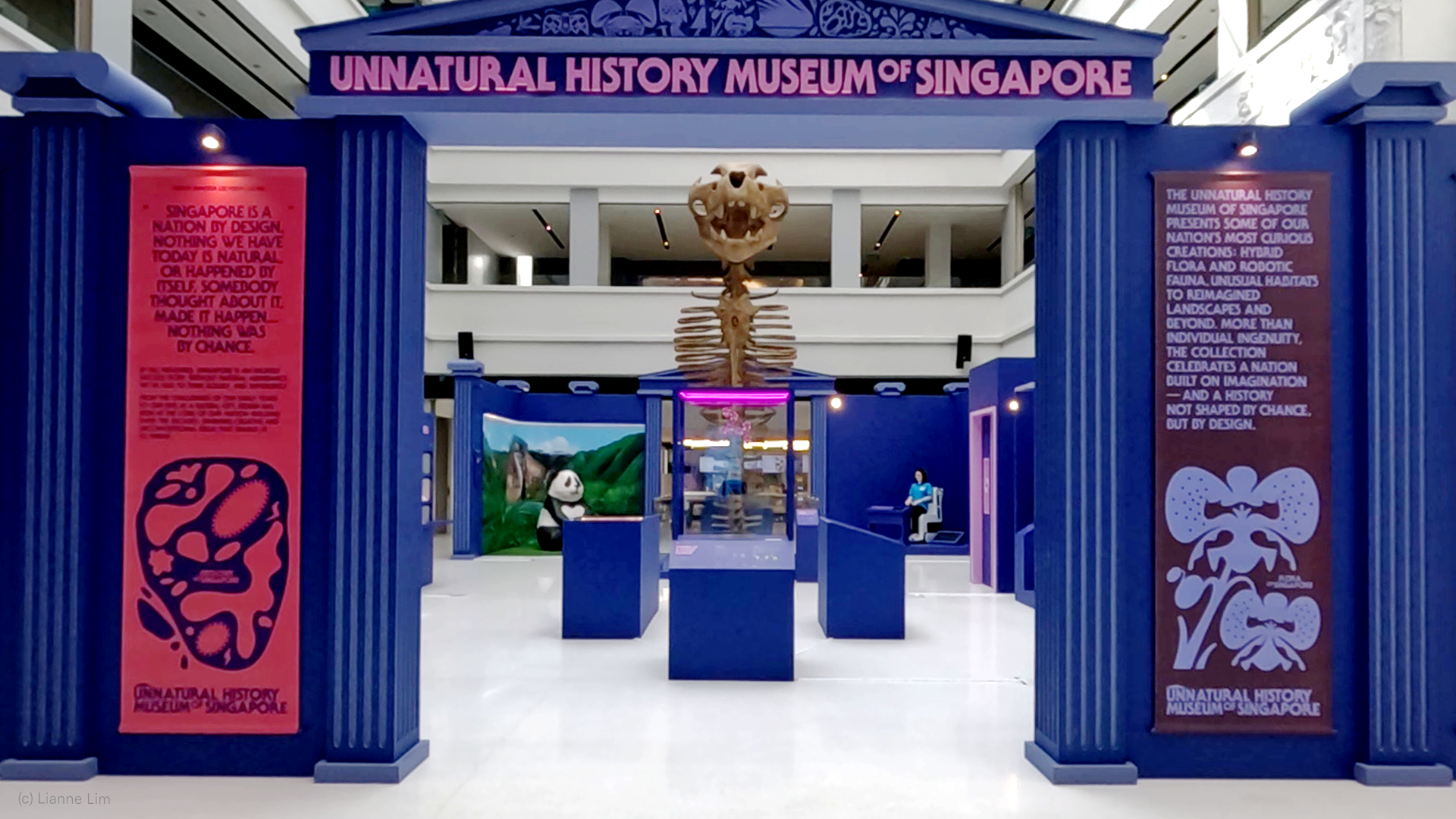
My itinerary was packed, so I only managed to stroll through Bugis and visit the Unnatural History Museum of Singapore, an exhibition housed in the National Design Centre.
I’d long known that Singapore was not gifted with natural resources which made witnessing its growth since its independence exactly 60 years ago all the more impressive. The nation’s success is a testament to vision and design. As Lee Hsien Loong, former Prime Minister and now Senior Minister of Singapore, once said: “Singapore is a nation by design. Nothing we have today is natural, or happened by itself. Somebody thought about it, made it happen. Not our economic growth, not our international standing, not our multiracial harmony, not even our nationhood. Nothing was by chance.” That same quote was displayed on a banner at the entrance of the exhibition — a powerful reminder that everything about Singapore, from its skyline to its systems, was crafted with intent.
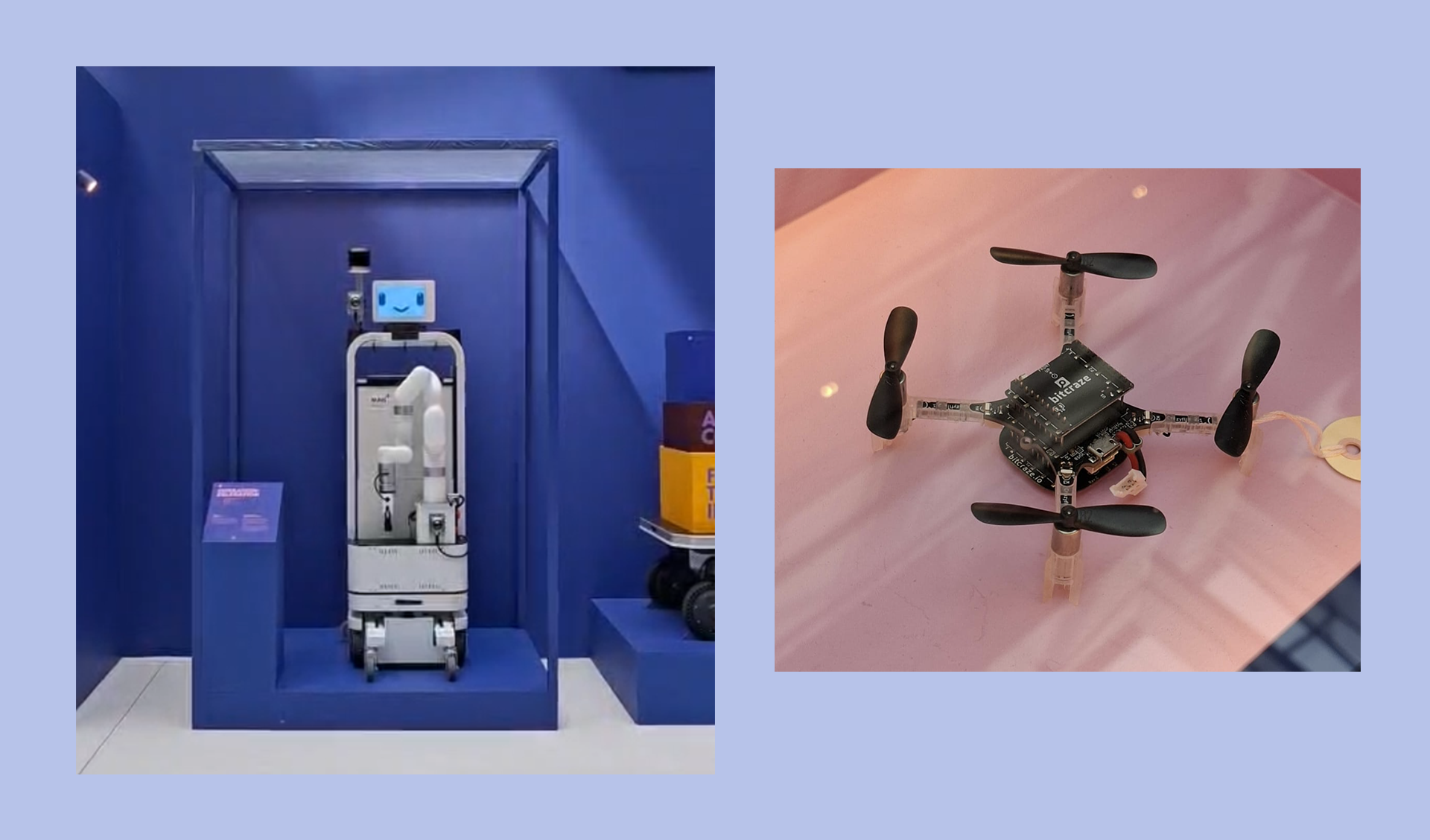
In glass cases, mechanical creatures blink with gentle servos: metal starlings, synthetic pollinators, soft-body creatures that hum quietly like living circuits. They seem alive, but they’re undeniably engineered – a gentle reminder that survival in a small city often requires invention, not inheritance.
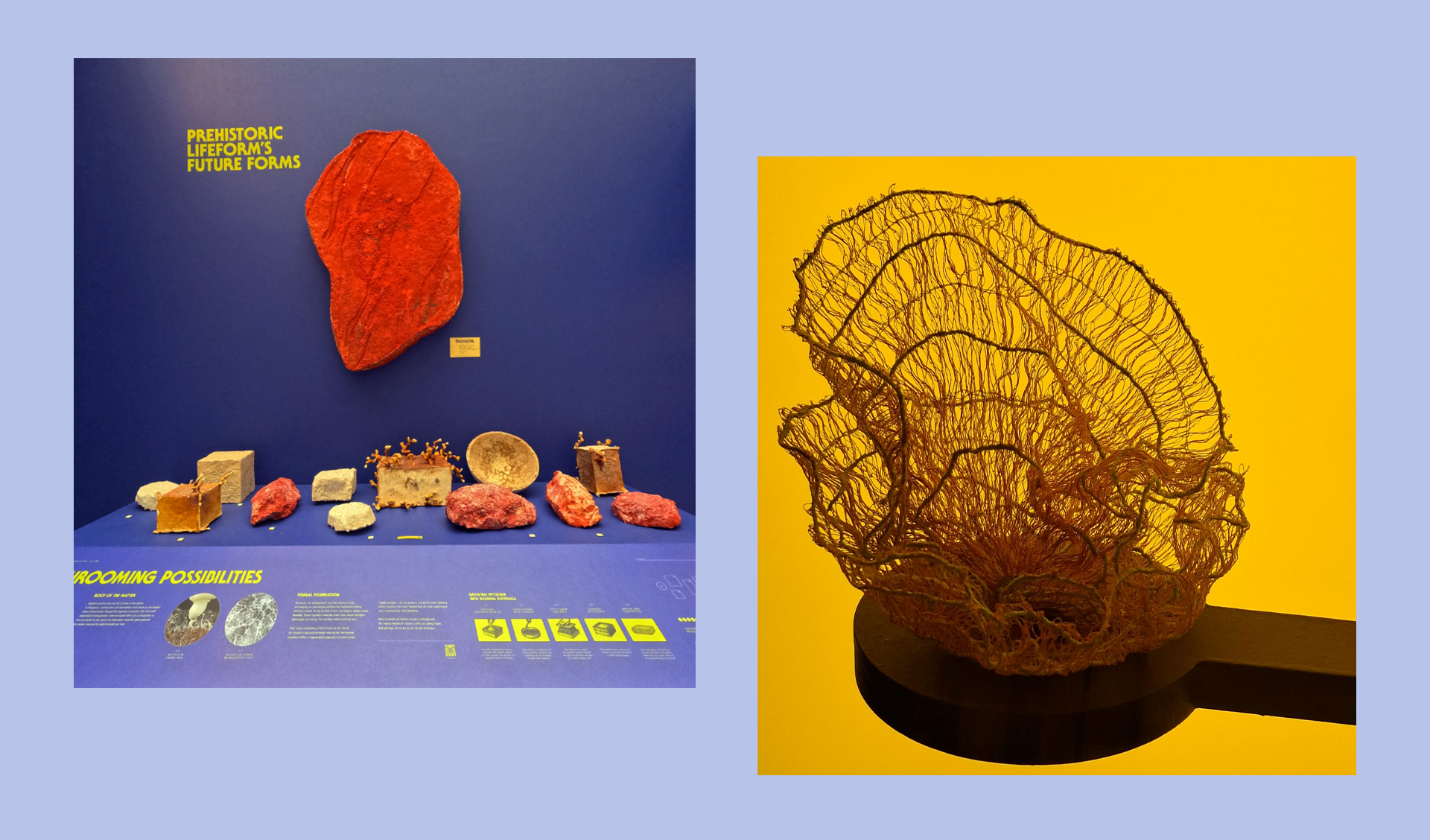
Plants that look almost real, leaves with geometric veins, stems with impossible symmetry, blossoms that glow faintly as if evolution took a shortcut through industrial design. They stand as props for a new kind of nature, shaped by necessity rather than chance.
And the centerpiece of the exhibition is a towering six-meter Merlion skeleton, the half-lion, half-fish Singaporean icon, posed as though unearthed from mythic soil. Its bones are smooth, too perfect, clearly fabricated and yet it feels ancient. It whispers about a nation that built its identity not from mountains or rivers, but from imagination carved into the public psyche.

It made me think: What does “nature” even mean when you don’t have natural resources? And how does design, human intention, creativity, and technology become the bedrock of identity, survival, and progress?
In Singapore, the answers braid together into a single truth. When the land cannot provide, nature stops being something you inherit and becomes something you construct. It turns into a designed condition, a landscape of ideas, symbols, and systems built with intention. The Merlion fossil, the synthetic fauna, the engineered flora: they aren’t imitations of nature but declarations that imagination can stand in for geology, and that storytelling can take the place of mountains and rivers.
Here, design fills the void that nature leaves behind. It becomes the mechanism of survival, the strategy for growth, the narrative engine that shapes a nation’s identity. Progress is no accident; it’s engineered. Heritage isn’t dug out of the ground; it’s carved from vision. In a place where evolution cannot rely on the wild, design becomes the wild, ever-adaptive, ever-inventive, always pushing toward the next version of itself.
Stepping outside the exhibition, this ethos is visible everywhere. From the orderly paths of the Botanic Gardens to the soaring Supertrees of Gardens by the Bay, from the symmetry of Marina Bay Sands to the pedestrian-friendly planning of Orchard Road, from the meticulously designed Jewel Changi Airport to the efficient MRT network, from the enticingly organized food stalls in Lau Pa Sat to the ordering process itself, every corner of Singapore feels intentionally composed. It’s a cityscape where design shapes not only objects, but the very experience of life itself, turning everyday movement and observation into a testament to human creativity and intention.
In Singapore, design isn’t an accessory to life. It is the ecosystem.
Here’s some food for thought, Singapore’s neighbors like the Philippines are extremely rich in natural resources but they seem to be underutilized or used in poorly designed systems. How can we achieve the success Singapore achieved in two generations through thoughtful design?
