Faster Time to Market
Products, features, services, or changes move from idea to usable release more quickly and predictably.
Case Study
United States-based field service technology company
Ingenuity worked as an embedded product engineering partner to bring a multi-tenant field-service platform to market, connecting telematics data with web and mobile workflows for providers serving organizations across the United States and Canada.
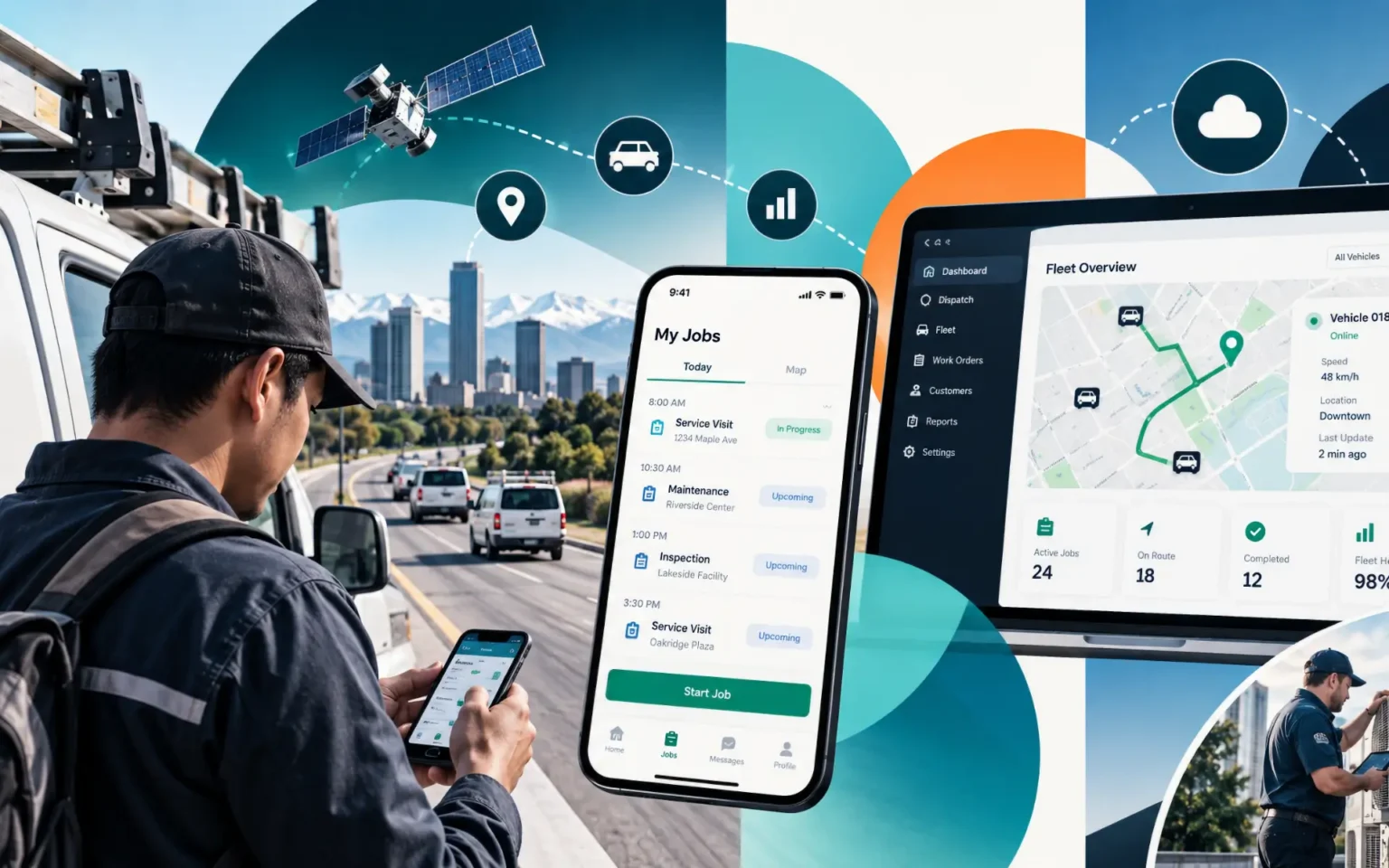
Field-service organizations often manage dispatching, workforce activity, customer operations, and fleet intelligence in separate systems. Telematics platforms can provide rich real-time vehicle data, but that information creates limited operational value when it remains disconnected from the workflows used by dispatchers, field technicians, and service managers.
The client saw an opportunity to create a white-label platform that combined field-service management with native telematics integration. The product had to support multiple telematics providers, operate across web and mobile environments, handle real-time data reliably, and remain configurable enough for partner organizations to present the platform as part of their own offering.
This was therefore both a product and architecture problem. The system needed to simplify complex field workflows for users while providing secure multi-tenant services, extensible integrations, reliable synchronization, and enough flexibility to support different providers and future capabilities.
Ingenuity worked alongside the client as a strategic product engineering and design partner rather than as a detached implementation vendor. The team contributed to product direction, technical architecture, user experience, integrations, and delivery strategy as the platform moved toward market.
That embedded model made it possible to connect technical choices directly to operational use cases. Integration architecture was shaped around how telematics data would actually influence service workflows, while interface design focused on the speed and clarity required by dispatchers, technicians, and operational managers.
The work continued beyond an initial release. Product iteration, scaling, and feedback from telematics providers and field-service users became part of the ongoing delivery loop, allowing the platform to evolve as the market and partner requirements developed.
The backend architecture ingests and synchronizes fleet and vehicle information through flexible provider APIs so telematics data can be used inside field-service workflows rather than viewed in isolation.
Ingenuity designed scalable backend services to support multiple telematics providers and white-label deployments. The architecture emphasized secure data handling, extensibility, and the ability to add providers and capabilities without rebuilding the core platform for each partner.
The product combined a web operations portal with native Android workflows for field technicians, with real-time synchronization between field and office activity. Interfaces were designed around dispatch, work execution, status visibility, and the practical demands of field-service environments.
The platform was structured to support ongoing feature development and market feedback. This allowed the client to continue expanding its offering while maintaining a coherent foundation across integrations, operational workflows, and partner deployments.
The collaboration helped the client bring a differentiated field-service product to market and onboard multiple telematics companies serving field-service organizations in the United States and Canada.
By connecting fleet intelligence directly to operational workflows, the platform created a more unified environment for visibility, coordination, technician activity, service responsiveness, and data-informed decision-making. Telematics providers could extend their offering into field-service operations without forcing customers to depend on a separate disconnected toolset.
The continuing engagement is also evidence of the delivery model: Ingenuity remained involved as the platform scaled, new capabilities were introduced, and the product experience was refined in response to real market use.
Products, features, services, or changes move from idea to usable release more quickly and predictably.
Leaders and operators gain clearer, more timely understanding of performance, workflows, risk, ownership, and system behavior.
Digital processes, systems, and teams can handle growth in users, transactions, complexity, or geography without proportional increases in friction or cost.

Service
Design and build dependable custom software, platforms, and integrations around complex business requirements.
Explore

Service
Discover, validate, and design digital products around real user needs and measurable business outcomes.
Explore

Insight
PerspectiveThe hardest part of loyalty is rarely awarding points. It is coordinating identity, transactions, offers, rules, channels, customer service, data, and operations so the customer experiences…
Explore
Insight
PerspectiveA dashboard becomes strategically useful when it stops being a destination for charts and becomes part of the system through which people notice change, understand context,…
Explore

Insight
GuideA public service is larger than its interface. Design the citizen journey, backstage operations, information flows, policies, and technology as one system.
Explore
Building a multi-tenant platform, integration-heavy product, or operational system? Share the product and architecture constraints you need to solve.